Sustainability in hospitality is often discussed through the lens of energy, water, waste management and large-scale operational change. But some of the most interesting progress happens much closer to the guest — including behind the bar. I recently had the pleasure of joining the judging panel for the Sustainable Bartending Competition, hosted by Media One Hotel for the third consecutive year.
It was my first year judging the competition, and I wasn’t entirely sure what to expect. What I discovered was far more than a cocktail competition. The initiative is designed as a learning platform for emerging bartenders — building sustainability awareness, confidence and industry connections, while encouraging them to become sustainability champions within their own hotels.
Each year, the competition explores a different area of sustainability. This year’s focus was waste reduction, local sourcing and eco-friendly garnishes and it was fascinating to see how differently each bartender interpreted the challenge.
Starting With the Waste
What I particularly liked was that the conversation didn’t necessarily begin with, “What cocktail shall I make?” For many, it began by looking around their own bars, restaurants and kitchens and asking: Where are we creating waste? What is regularly left over? What are we throwing away? Are we using one part of an ingredient and discarding the rest? Is there something coming from the kitchen that could have another life behind the bar? It’s a simple exercise, but it starts a completely different thought process. Once you begin looking at what is in the bin, you start asking why it is there — and whether it actually needs to be.
Throughout the competition we saw ingredients being given another life through purées, homemade syrups, infusions, garnishes and fruit leathers. Peels, pulp and other components that might ordinarily be discarded became ingredients in their own right. It demonstrated something we continually advocate within sustainable hospitality: before something becomes “waste”, ask whether it still has value. And perhaps more importantly, it generated conversations beyond the bar itself. That is often where sustainability starts — not necessarily with an enormous project, but with someone noticing something and asking, “Why do we do it this way?”
Bartender or Chef?
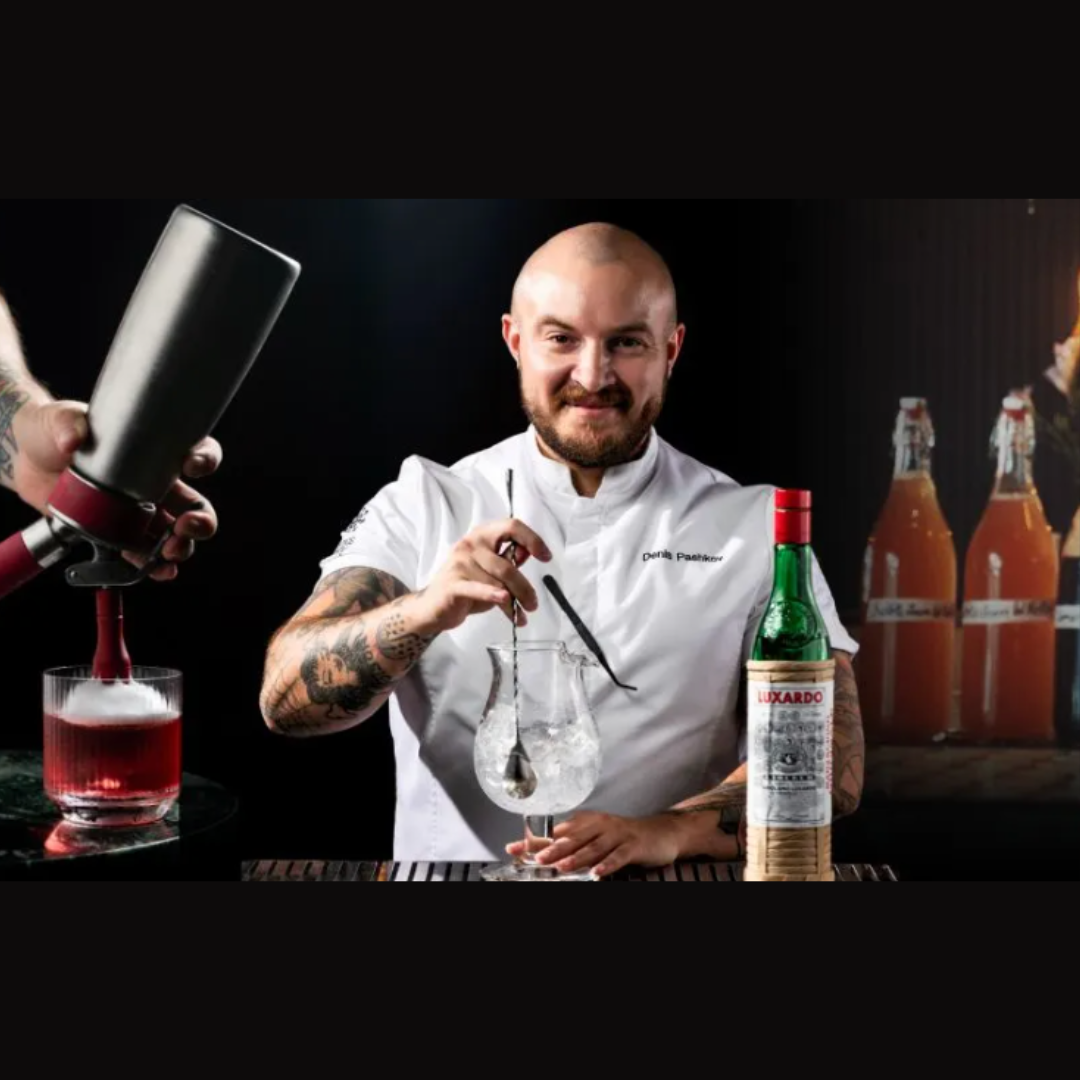
One of my biggest takeaways from the judging was just how much the role of the bartender has evolved. At times, I felt as though I was watching chefs rather than bartenders. There was mixing, blending, infusing, dehydrating, preserving and experimenting with textures and flavours. There was also a real consciousness around using the whole ingredient. If a fruit was being used, the thinking didn’t necessarily stop with the juice. Could the peel become a garnish? Could the pulp become a purée or leather? Could another part be infused into a syrup?
There is a genuine art to modern bartending, and judging gave me a new appreciation for the skill involved. It isn’t simply about combining ingredients in the right proportions. There is technique, balance, presentation, storytelling and an understanding of how flavours interact — while in this case also considering waste and sustainability.
The creativity was impressive.
Local Ingredients, Culture and Storytelling
I also particularly enjoyed seeing local and cultural influences woven into the drinks. Sustainability isn’t only about eliminating waste. Ingredient selection, provenance and the stories behind what we consume are also part of the conversation. The bartenders incorporated local flavours and cultural references into their creations, often combining traditional ingredients with modern techniques. And that creates another opportunity — to tell the guest a story.
A cocktail inspired by a local ingredient, incorporating something rescued from the kitchen or using an ingredient in its entirety suddenly becomes more than a drink. It becomes a conversation about where ingredients come from, how we use them and what we consider to be waste.
Taking Sustainability to the Guest
For me, this is where initiatives like this have another enormous opportunity. Hotels spend considerable time implementing sustainability programmes behind the scenes. We measure energy and water, segregate waste, reduce food waste, source more responsibly and work with suppliers — but guests don’t necessarily see much of it. The bar provides a very different communication channel.
A bartender has a guest sitting directly in front of them, often genuinely interested in what is being prepared. Explaining that a garnish was made from something normally discarded, an ingredient was sourced locally, or a syrup uses another part of the fruit opens a sustainability conversation naturally.
It isn’t a lecture. It’s part of the experience.
And that conversation may introduce a guest to an idea they hadn’t considered before — using more of an ingredient at home, preserving rather than discarding, choosing local products or simply thinking differently about consumption. For hotel communications and marketing teams, it is also a relatively easy win. These drinks provide great stories for menus, social media, guest newsletters, activations and F&B promotions. Rather than simply telling guests that a hotel is committed to sustainability, give them something they can experience, taste, photograph, talk about — and perhaps even take an idea home from. Sustainability becomes part of the guest experience rather than something hidden in a sustainability report.
A Cocktail Doesn’t Have to Contain Alcohol
There is another evolution happening behind the bar too: a beautifully crafted cocktail no longer has to revolve around alcohol. The no- and low-alcohol sector has developed enormously, and guests increasingly expect sophisticated alcohol-free choices rather than a soft drink or the token “mocktail”. It gives bartenders another space to apply the same creativity — infusions, herbs, botanicals, teas, spices, fruit, syrups, texture, aroma and presentation — while responding to a broader shift towards moderation and more considered consumption. A well-designed beverage programme can give drinking and non-drinking guests the same sense of occasion, creativity and craftsmanship.
Sustainability Starts Before the Bottle Reaches the Bar
Of course, sustainability behind the bar is only part of the story. A bartender can minimise citrus waste and use every part of an ingredient, but the footprint of a drink starts long before the bottle arrives. Where were the ingredients grown? How much water and energy went into production? How far did the bottle travel? How heavy is the packaging, and can it be recycled, reused or refilled?
Increasingly, the drinks industry is asking these same questions.
Major producers are looking across the whole value chain — from regenerative agriculture and water stewardship to lower-carbon production, lighter bottles, recycled materials and refillable packaging. Diageo, for example, is investing in regenerative agriculture and refillable spirits systems, while Pernod Ricard describes its sustainability journey as “grain to glass.” Bacardi is targeting water, carbon, responsible sourcing and packaging, while HEINEKEN continues to expand reusable formats, recycled packaging and sustainably sourced ingredients.
None of this makes a bottle “perfectly sustainable” — sustainability is far more complex than that. But it does show how the beverage industry is evolving. And it gives hotels another opportunity to influence change. If we’re asking bartenders to think about what goes into the glass, procurement and F&B teams should also be asking what went into the bottle.
The more questions we ask of the products we purchase, the more we can help push sustainability through the entire supply chain.
Education Comes in Many Forms
Perhaps one of the most important aspects of the Sustainable Bartending Competition is the education.
We sometimes think of sustainability education as formal training, workshops, policies and presentations. Those are important, but education can take many forms — and a competition can be an incredibly effective learning environment. Participants research, experiment, investigate waste within their own operations, learn from their peers and then have to explain the thinking behind their choices. Rather than simply being told to “reduce waste”, they experience the challenge of finding value in something that might otherwise have been discarded. At the same time, they build confidence, make industry connections and take those ideas back into their hotels.
These are exactly the sustainability champions we need. Not only sustainability managers, but chefs, engineers, housekeepers, front-office colleagues — and bartenders. Because the people working directly with products, processes and guests every day are often the ones best placed to spot an opportunity for change.
Hospitality Coming Together
The competition brought together bartenders from 19 hotels and hospitality properties across the UAE, demonstrating the industry’s willingness to collaborate, share ideas and learn from one another:
- InterContinental Hotel Abu Dhabi
- Bab Al Qasr Hotel Abu Dhabi
- Grand Hyatt Abu Dhabi
- InterContinental Residences Abu Dhabi
- Grand Millennium Dubai
- JA Beach Hotel
- JA The Resort / JA Resorts & Hotels
- Radisson RED Hotel
- Media One Hotel
- Studio One Hotel
- Taj Dubai
- JA Lake View Hotel
- Jumeirah Zabeel Saray
- JA Hatta Fort Hotel
- JW Marriott Marquis
- Le Méridien Mina Seyahi
- W Dubai – Mina Seyahi
- The Westin Mina Seyahi
- Marriott Harbour Hotel & Suites
It was great to see such broad representation and, importantly, emerging bartenders being given the opportunity to showcase their skills and ideas.
Celebrating This Year’s Winners
Of course, it was still a competition — and there was plenty of talent for the judging panel to consider.
Congratulations to this year’s Top 3:
Winner — Benjamin Gomes, InterContinental Residences Abu Dhabi
2nd Place — Vidit Ghaire, W Dubai – Mina Seyahi
3rd Place — Krispus Kisku, Studio One Hotel
Congratulations also to everyone who participated. Putting your work and ideas in front of a judging panel takes confidence, particularly when you’re being assessed not only on the finished drink but on the thought, technique and sustainability principles behind it.
More Than a Cocktail Competition
I came away from the competition with a much greater appreciation for the skill and creativity involved in modern bartending — it really has become an art form.
But I also came away reminded of something equally important.
Sustainability doesn’t have to be taught only in classrooms, meetings or through policies and procedures. Sometimes it can be taught through a cocktail.
And perhaps that is what makes an initiative like this particularly effective.
One competition can encourage a bartender to investigate waste in their bar. That conversation can extend into the kitchen. The resulting idea can become a drink on a menu. The bartender tells its story to a guest. The communications team amplifies it. Another hotel sees the idea and adapts it. And perhaps that guest goes home thinking slightly differently about what they consume and what they throw away.
At the same time, hotels can look further upstream — towards the producers, ingredients, packaging and supply chains behind the products they purchase.
From grain to glass, and from the bartender to the guest, there are opportunities to make better choices at every stage.
Thank you to Media One Hotel for inviting me to join the judging panel this year, and for continuing to create a platform that brings education, creativity and sustainability together.
And congratulations again to all of this year’s participants. I thoroughly enjoyed the experience — and I will certainly never look at what goes into a cocktail, or what is left behind after making one, in quite the same way again.